

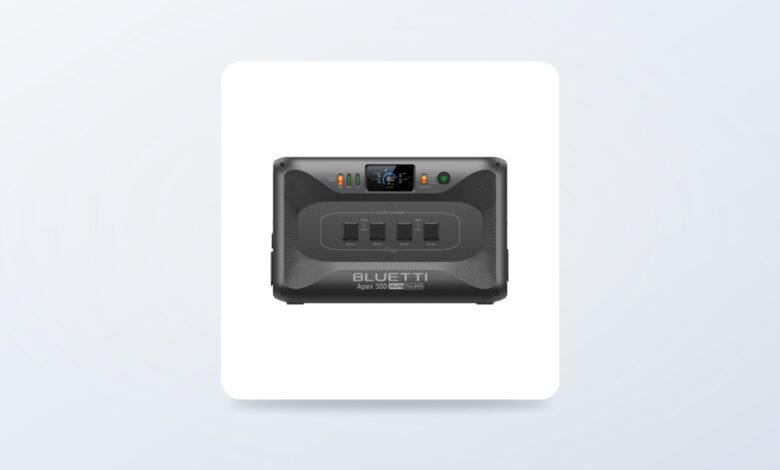
Choosing a portable power station is mostly a question of scale. A smaller unit is easier to move and costs less to equip, while a higher-capacity model can run more demanding devices for longer. In the Canadian range, BLUETTI spans compact travel units through systems aimed at home backup.
We compared four options by output, stored energy, expandability and likely use. The useful distinction is not simply which model has the biggest number: it is whether your load is a phone and laptop, a campsite fridge, or a home circuit that needs a more deliberate backup plan.
When you shop through the links in this article, the retailer may pay us a commission. Your price stays the same.
Key facts
- Elite 100 V2 is the lighter 1,024Wh, 1,800W choice for short trips and essential backup.
- Elite 200 V2 moves up to 2,073.6Wh and 2,600W for longer camps and broader household coverage.
- Apex 300 pairs 2,764.8Wh with 3,840W output, 120V and 240V capability, and an expandable system.
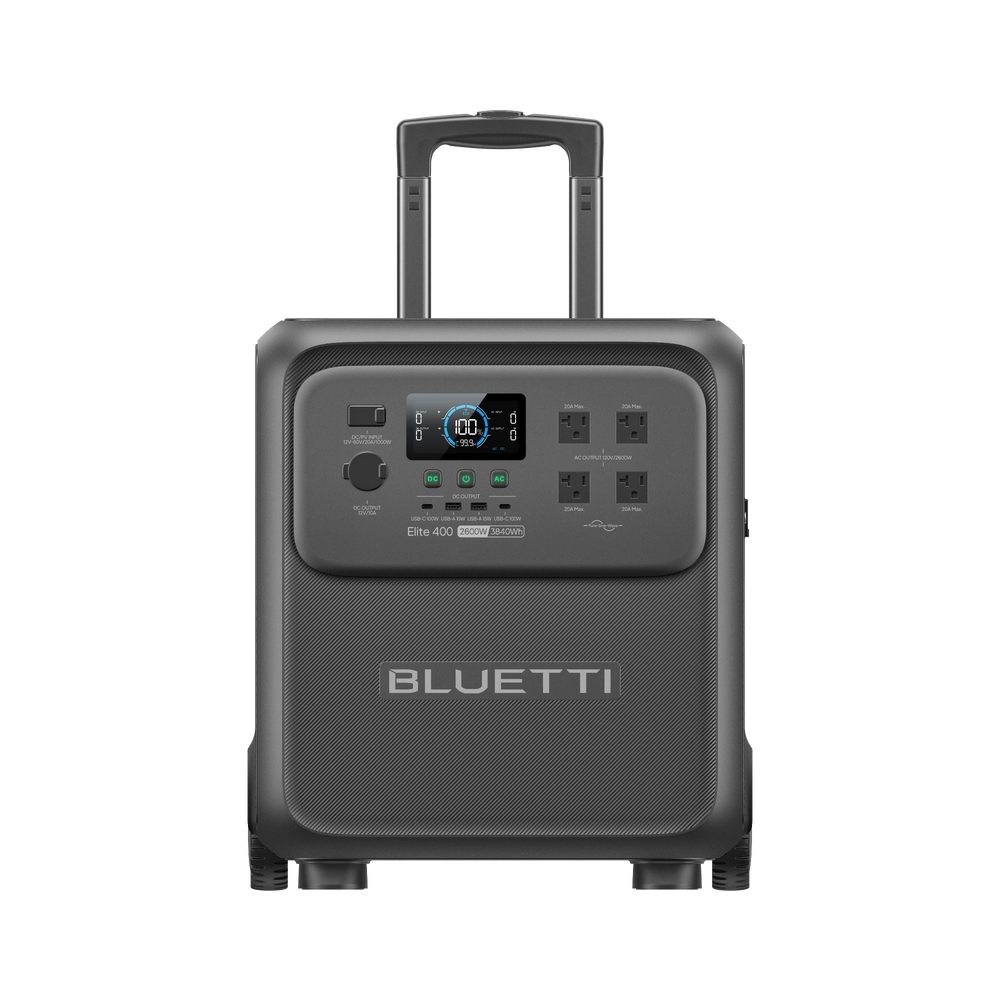
- Elite 400 emphasizes a rolling format and 3,840Wh capacity for home backup.
- Compare current pricing, bundle contents, availability and appliance compatibility on BLUETTI Canada before deciding.
The main differences
The official Canadian store lists these models with LiFePO₄ batteries. Capacity, measured in watt-hours, describes stored energy; output in watts indicates what a station can supply at once. Neither figure guarantees a particular runtime: appliances cycle, real loads vary, and inverter losses matter. BLUETTI’s own runtime tables are estimates, so treat them as planning references rather than a promise. If your needs are modest, the Elite 100 V2 may be enough; if a fridge or several appliances enter the picture, compare the Elite 200 V2 and larger models.
- Watt-hours help estimate duration.
- Watts indicate the load the inverter can support at once.
- Ports, surge behaviour and recharge options decide whether the headline figures are useful for your equipment.
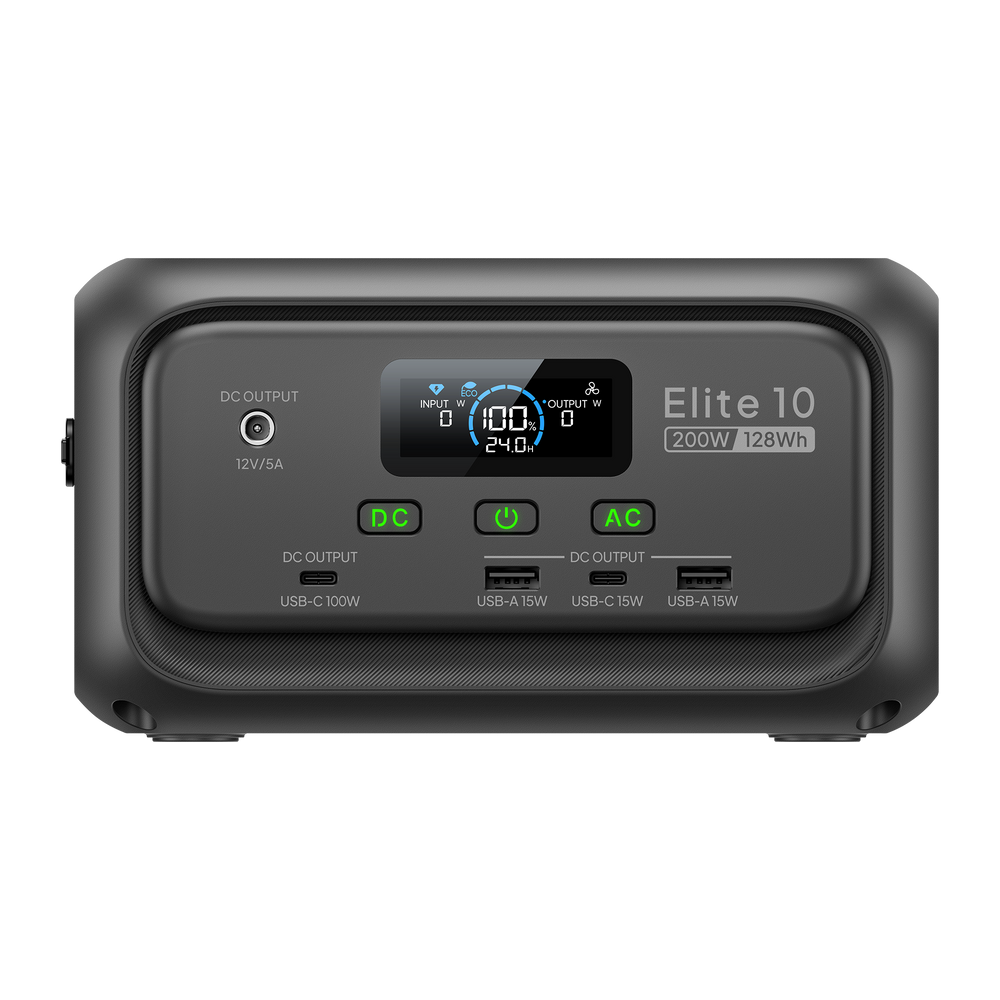
On the entry side, the Elite 100 V2 combines 1,024Wh with 1,800W output. It sits between pocket-size power banks and larger stations: more useful for a laptop, lights or selected essentials, but less forgiving when several appliances draw power together. Its reduced capacity is the trade-off for a less imposing setup. For genuinely small electronics only, BLUETTI’s Elite 10 is the smaller alternative; it is not a substitute for a station intended to run household appliances. Compare the Elite 100 V2 against the Elite 10 if weight is the first priority.
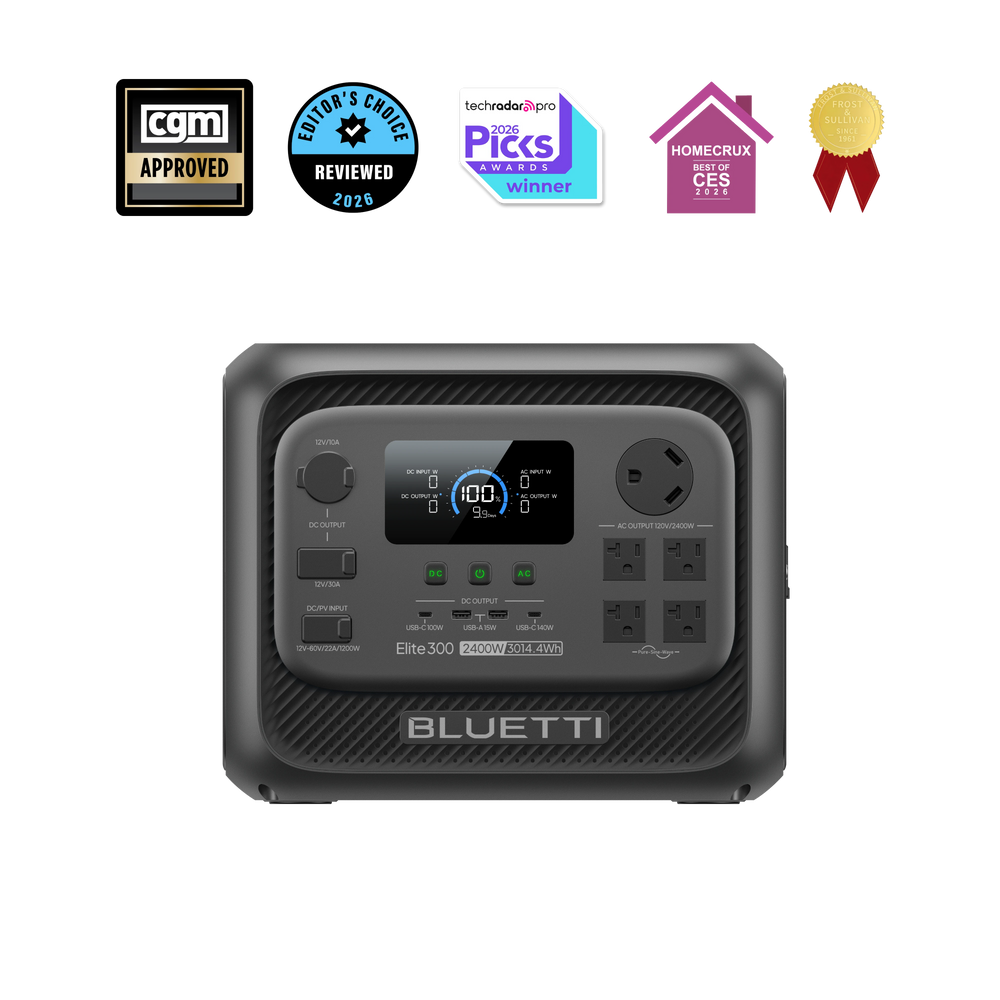
The Elite 200 V2 is a more balanced middle option at 2,073.6Wh and 2,600W. Compared with the 100 V2, it gives more reserve and stronger output headroom, which matters for a small fridge, cooking appliance or a longer off-grid stay. It remains a single station rather than a scalable home battery system, and the larger capacity adds weight and storage bulk. Buyers who want a conventional gas generator should also compare fuel storage, noise, ventilation and their actual outage loads; these battery units are quiet at the point of use but need recharging. The Elite 200 V2 is the more flexible step-up, while the Elite 100 V2 keeps the kit simpler.
Capacity versus flexibility
The Apex 300 makes a different argument. BLUETTI lists 3,840W output and 2,764.8Wh capacity, including 120V and 240V power. Its output is the highest of these four, but it stores less energy than the Elite 400. It also belongs to an expandable ecosystem, with compatible expansion batteries and system components sold separately. That creates a path to a larger setup, though the full system cost and installation needs can grow quickly. Check the Apex 300 itself and then price any batteries or hub components you actually need.
That output-and-expansion emphasis suits a buyer who has mapped specific circuits or RV equipment and wants room to build. It is more configuration-sensitive than a self-contained mid-size station. A 240V label alone does not mean it can run every hardwired appliance: check voltage, starting watts, wiring and transfer requirements with a qualified electrician where needed. The Apex 300 can be compelling when those capabilities solve an identified need, but extra power is not automatically useful power. Buyers who do not need 240V or modular growth may find the Elite 200 V2 the more sensible portable option.
The Elite 400 puts capacity first among these picks: 3,840Wh with 2,600W output, in a rolling format. Against the Apex 300, it stores more energy but supplies less peak power and does not make the same 120V/240V, modular-system case. That makes it the clearer fit for longer-duration backup when mobility around the home matters, provided its output covers the devices you plan to connect. It is still a portable station, not a whole-home installation by itself. Compare the Elite 400 with the Apex 300 when those two priorities compete.
How they compare
| Model | Listed specs | Main strength | Best fit |
|---|---|---|---|
| Elite 100 V2 | 1,024Wh / 1,800W | Lower bulk | Short trips, essentials |
| Elite 200 V2 | 2,073.6Wh / 2,600W | Balanced reserve | Camping, mixed loads |
| Apex 300 | 2,764.8Wh / 3,840W | Output and expansion | RV or planned backup system |
| Elite 400 | 3,840Wh / 2,600W | Built-in capacity, wheels | Longer home backup |
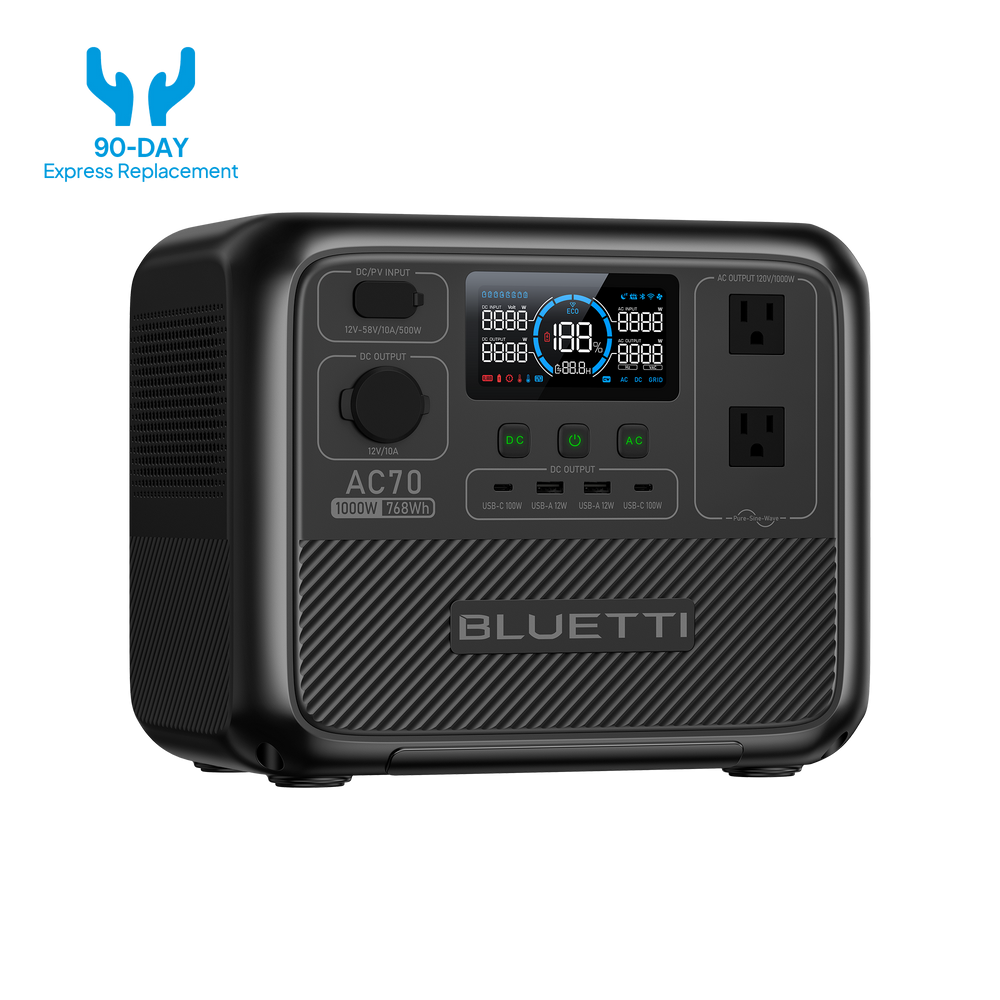
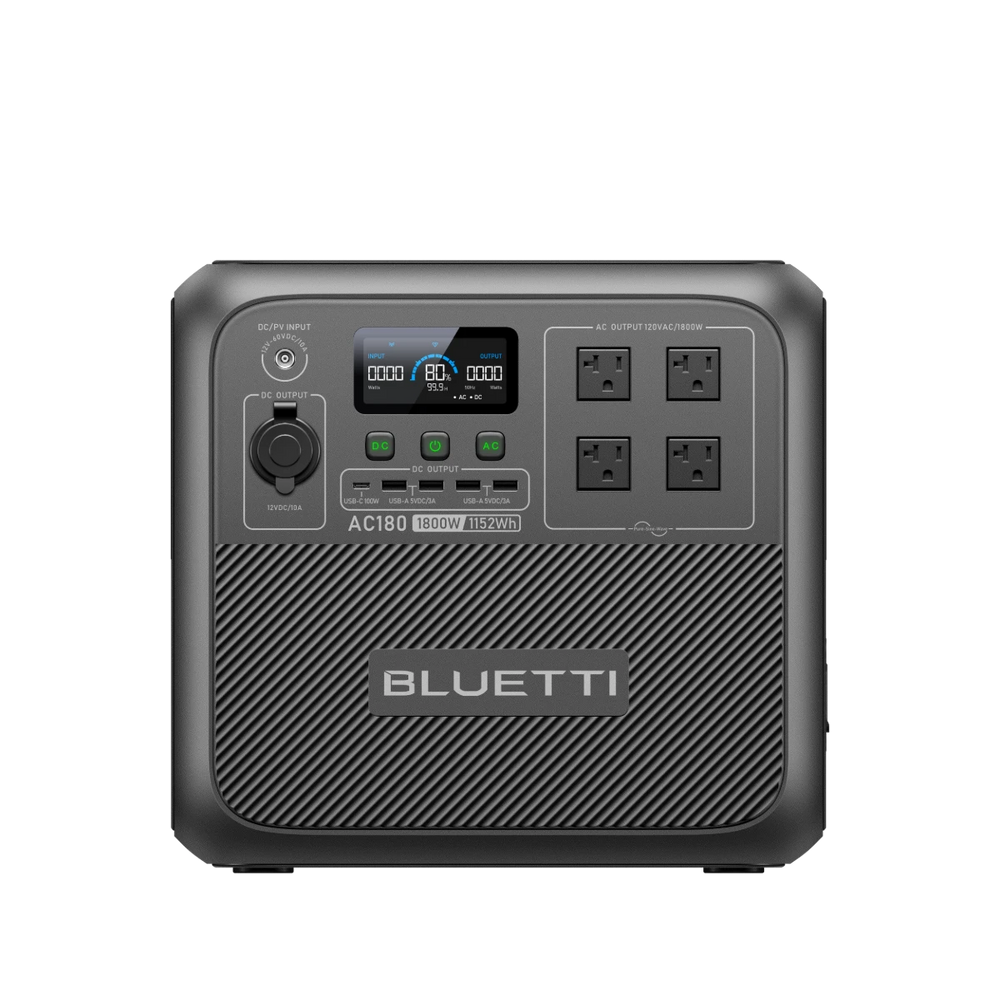
Two adjacent alternatives help set the boundaries. BLUETTI’s AC180 is listed at 1,152Wh and 1,800W, close to the 100 V2 in output but with a different capacity and feature set. It may suit buyers comparing current mid-size options rather than simply moving upward in the Elite line. Check ports, charging inputs and current bundle details directly, since similarly named capacity tiers do not imply identical equipment. The AC180 is worth a side-by-side check with the Elite 100 V2.
Choosing a setup
Before choosing a model, make a quick inventory. This often prevents paying for capacity that sits unused or discovering that a unit cannot start a device:
- Write down each device, its running watts and any higher start-up draw.
- Estimate how many hours it needs to run between recharges.
- Decide whether you can recharge from a wall outlet, vehicle or solar panel.
- Check whether panels, cables, expansion batteries or transfer equipment are included or sold separately.
- Measure where the station will ride or store, including clearance for handles and wheels.
Solar bundles can simplify a campsite setup, but panel wattage is only one part of the calculation. Sun, season, angle and the unit’s solar-input limits affect charging. A plain station usually costs less initially than a kit, though matching a panel later can add expense and compatibility questions. The Elite 200 V2 is an easier starting point for mixed-use trips; the Apex 300 becomes more rational when its higher output or expansion options are genuinely required. Compare the Elite 200 V2 solar kits with the Apex 300 range only after checking input compatibility.
For longer outages, compare a portable station with a fixed home battery or a fuel generator as well. A portable model can move between rooms and trips, while a fixed system may integrate more cleanly with selected home circuits. A fuel generator can run for longer with refuelling but requires outdoor operation and safe exhaust handling. These are different operating choices, not interchangeable specifications.
- For packability: Elite 100 V2, if its output and capacity cover the intended essentials.
- For flexible camping: Elite 200 V2, the strongest balance in this comparison.
- For higher-output RV or expansion plans: Apex 300, after checking the complete system requirements.
- For longer home backup in a rolling unit: Elite 400, if its output fits the loads.
Where we land
For most buyers who want one portable station for camping and occasional backup, we would start with the Elite 200 V2: its capacity and output are a meaningful step beyond the 100 V2 without committing to a larger expansion ecosystem. Choose the Elite 100 V2 when weight and a simpler load list matter most; choose the Apex 300 for its stronger output and modular path, or the Elite 400 when built-in energy reserve and wheels are the priority.
The limitation is practical: none is a universal outage solution without matching your appliance loads, recharge plan and wiring. Prices and bundles also change, so compare the current Canadian listings and confirm what is included before settling on a configuration.