
Buying ornamental alliums is partly a question of colour, but the more useful question is where their flowers will sit in the garden. DutchGrown™ has a broad UK bulb catalogue, from single varieties to coordinated collections. Its product pages give enough detail to compare shape and growing conditions, though the range is seasonal and the planting advice still needs to match your own soil and light.
We reviewed the UK store’s published range and product information, rather than growing or testing the bulbs. The listings make a convincing case for gardeners who want architectural late-spring flowers and a choice of scale. They are a less straightforward fit where the soil stays wet or the planting position is heavily shaded.
When you shop through the links in this article, the retailer may pay us a commission. Your price stays the same.
Key facts
- DutchGrown™ is a family company selling flower bulbs and plants through a UK store, with local dispatch stated on its site.
- Allium Ice and Sky Collection pairs white and sky-blue flowers for a deliberately coordinated effect.
- Allium Graceful Beauty is a lower-growing white selection; Allium Gladiator offers a taller, more architectural silhouette.
- Most of the featured alliums suit sunny to partly shaded positions with free-draining soil, so site conditions matter.
- Availability and dispatch timing vary by product and season; check the individual listing before planning a planting scheme.
A broad selection
The store’s strength is choice. Its UK catalogue includes tulips, daffodils, crocus, hyacinths and many other autumn-planted bulbs, alongside spring-planted bulbs and perennials. Within alliums, shoppers can move between single varieties and named mixes rather than being funnelled into one signature product. For a gardener building a layered display, that breadth is practical: it leaves room to coordinate colour, flowering period and plant height.
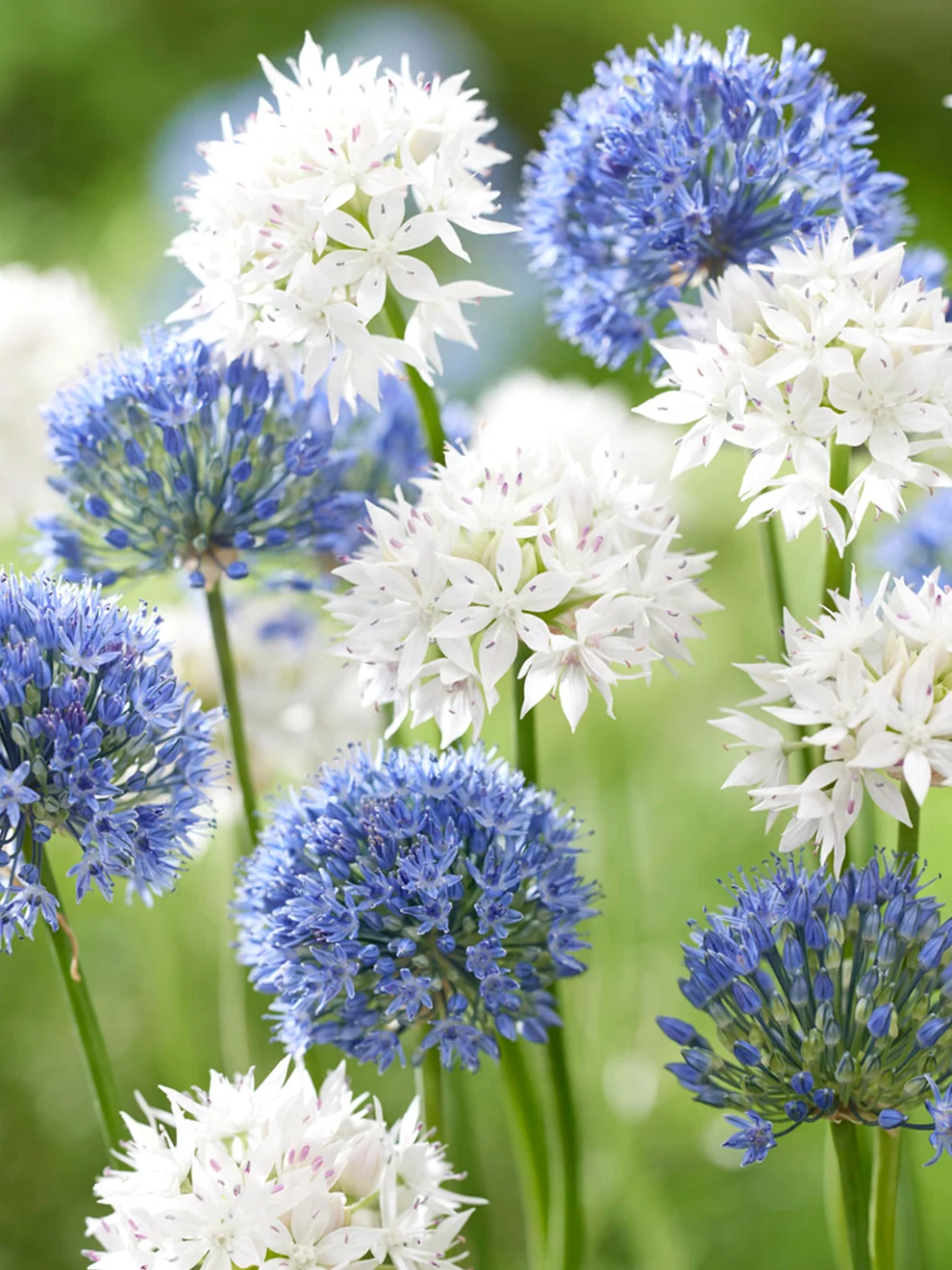
The Allium Ice and Sky Collection is a clear example. The listing describes a blend of white alliums and a sky-blue variety, a restrained palette that can connect pale flowers with cooler tones in an existing border. The product page presents them as easy to grow and asks for drained soil in sun or partial shade. Read that as a useful starting point, not a promise that every garden will produce the same result. You can view the Allium Ice and Sky Collection and check its current listing details. The collection page is also where to confirm its planting guidance and availability.
- Choose a named mix when colour coordination matters more than selecting every cultivar separately.
- Choose a single variety when you need a specific height or flower form.
- Check whether the product is autumn-planted or spring-planted before ordering.
Scale and shape
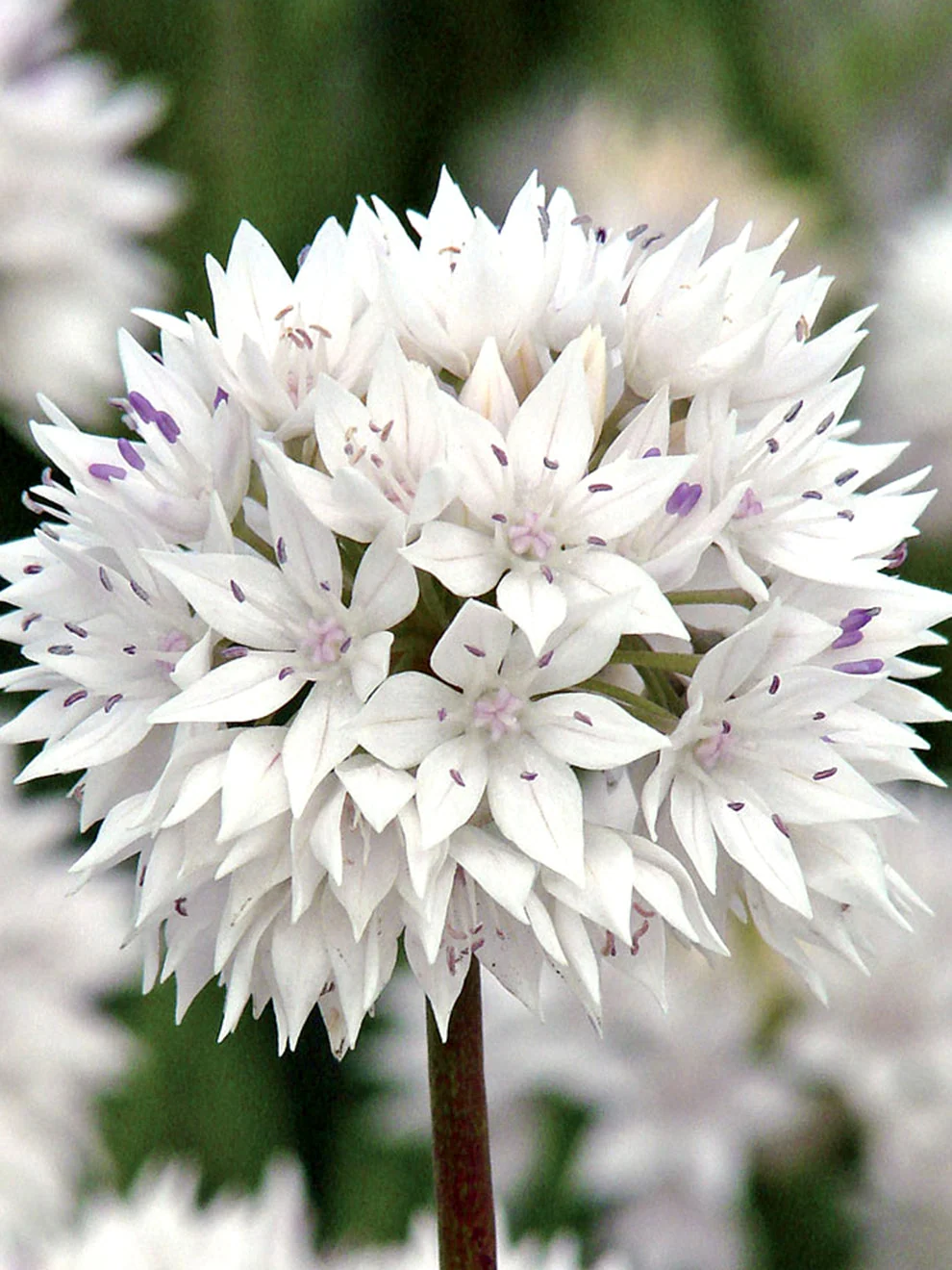
The best individual choices show how different the category can feel. Allium Graceful Beauty has clusters of white, star-shaped flowers with a subtle pink flush and lavender stamens. The store describes rounded flower heads and a compact stature, making it a more measured option at a path edge or among lower planting. The white allium option is the more restrained end of this shortlist. The listing also notes that it looks best planted in groups, so one bulb may not create the same visual effect as a drift. Its page is worth reading for bulb size and placement details before you settle on a quantity. The Graceful Beauty product page gives the store’s full description.
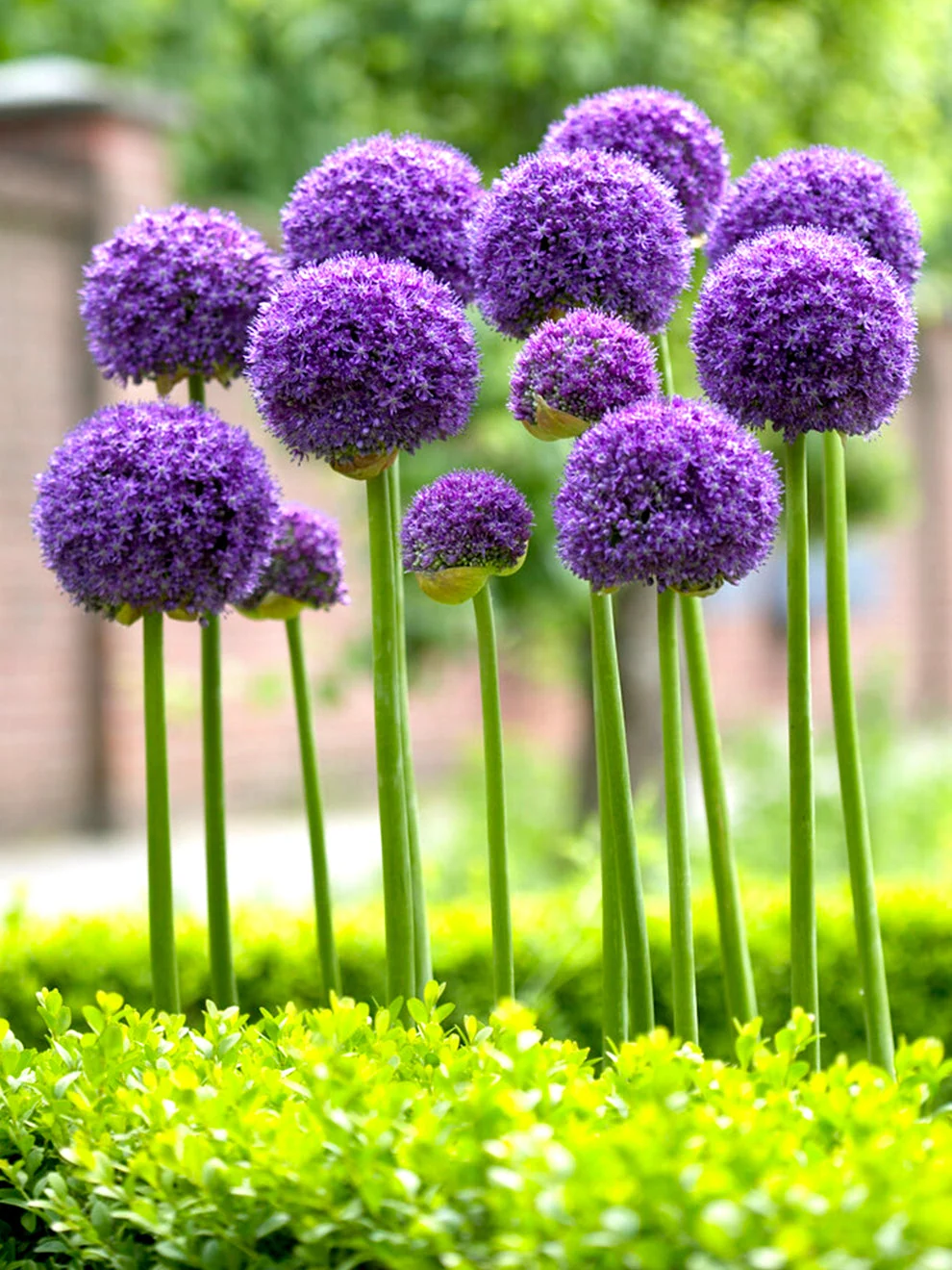
At the other end of the scale, Allium Gladiator is described as a tall, upright variety with lavender-blue flower clusters. It reads as a focal point: useful where stems can rise above neighbouring foliage, less suited to a very low border or a position where wind exposure is a concern. The product copy says the flowers are smaller than those of Globemaster or Ambassador, an unusually helpful comparison because it gives the description context without pretending every gardener needs the largest flower head. See the Gladiator product details for its current supply information.
The contrast makes DutchGrown’s range more useful than a catalogue that simply repeats colour names. The gardener can decide between a shorter white presence and a taller purple accent. Compare the Allium Graceful Beauty listing with the Allium Gladiator listing for the current growing notes and availability.
Border roles
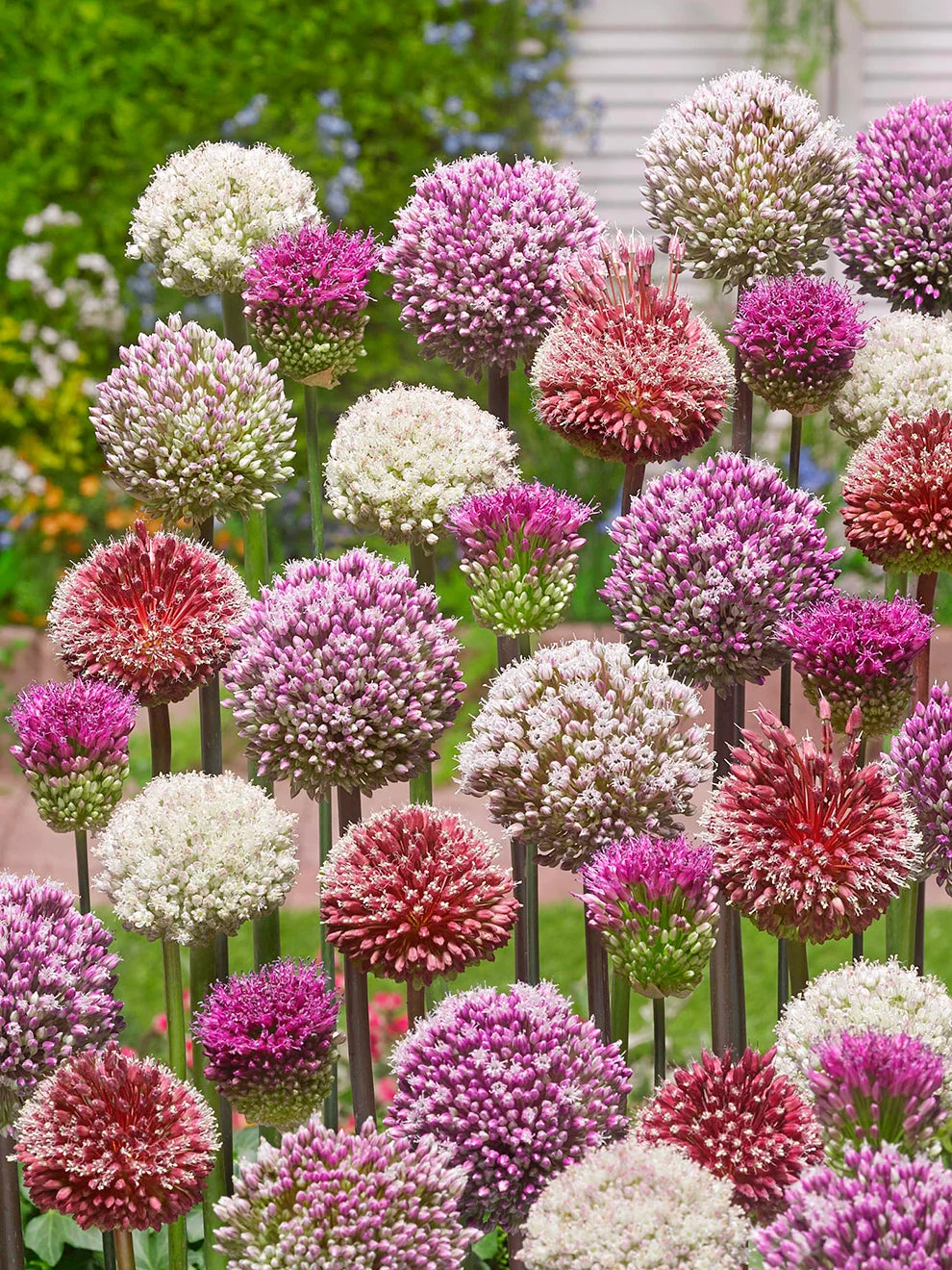
Alliums make most sense when their flowering period is part of a sequence. Their upright stems and rounded heads can punctuate a mixed border, while surrounding foliage helps keep the display connected after the flowers fade. The store’s Allium Tropical Tides Collection is pitched as a colourful blend rather than a single-note planting. That may appeal to gardeners who want a more varied effect, but its description is less specific about the individual varieties than the listings for single cultivars. Check the Tropical Tides listing before buying if individual variety names matter to you. If cultivar identity or exact flowering order is central to your plan, inspect the full page carefully before choosing.
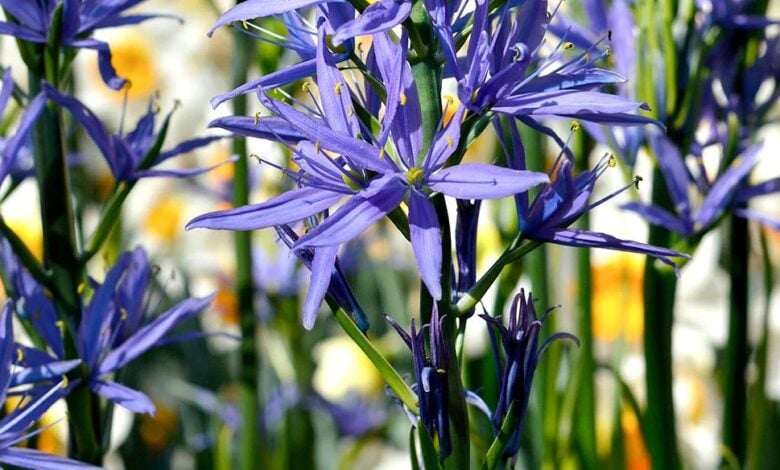
Not every useful bulb on the site is an allium. Camassia Esculenta, listed as a camas lily, has blue star-shaped flowers on slender stems and is described as a late-spring to early-summer bloomer that naturalises well. It is a sensible companion to consider if you are extending the season, although its preferred conditions and eventual spread should be checked against your bed. The product page has more detail than the category tile, and the Camassia Esculenta listing is a useful reference point. Its product notes can help you judge whether the later flowering slot works for your plan.
- Use lower forms near the front of a border where taller stems would obscure neighbouring plants.
- Reserve taller alliums for a spot where their stems can rise visibly above surrounding foliage.
- Pair flowering bulbs with plants that cover the space as bulb foliage declines.
- Use mixed collections for a coordinated look, but read the listing if you need exact cultivar details.
The practical checks
The main limitation is not a lack of choice; it is that choice alone cannot resolve the garden’s conditions. The site repeatedly points buyers toward free-draining soil and sunny or partly shaded positions. Heavy, persistently wet ground may be a poor match unless you can improve drainage or use a suitable container. Tall stems also need a position where they will not be lost behind dense planting or exposed to the strongest winds. Review the taller variety listing when planning around nearby plants.
There is a seasonal planning issue too. Bulbs are not interchangeable with ready-to-flower plants, and the store’s dispatch calendar varies across categories. A listing may be available for a future planting window rather than immediate planting. Look for the stated dispatch schedule, planting period and bulb-size information on the product page. DutchGrown also has separate guidance on flower bulb sizes and shipping, which is useful context when the category page leaves questions open.
- Confirm the planting season for each item in a mixed basket.
- Match sun exposure and drainage to the listing’s guidance.
- Check the named bulb size and supplied format rather than relying on a category thumbnail.
- Review shipping and dispatch information before planning a fixed planting weekend.
Buying from the UK store
The UK storefront is a meaningful advantage for local shoppers: DutchGrown states that it dispatches from London and organises its products for the UK market. Explore its UK collection pages to see the current seasonal mix. It also identifies itself as a family company and emphasises Dutch bulb quality. Those are useful signals about the seller’s positioning, but they do not replace product-level checks. The strongest buying experience here comes from reading the product page in full, especially where a mix, season or bulb-size choice affects the result. Start with the UK bulb catalogue and narrow the choice from there.
We would not treat broad catalogue size as proof that every option suits every border. Instead, shortlist by the physical role of the flower: a restrained white accent, a taller lavender focal point, or a coordinated blue-and-white group. Then check the current listing for supply timing and conditions. The UK allium collection and autumn-planted bulb range make a sensible starting point; use their product pages to confirm the details that matter to your garden. The single-variety listings give a clearer basis for comparing height and flower form.
Where we land
DutchGrown™ is a credible catalogue choice for UK gardeners who want variety and are comfortable selecting bulbs around their own soil, light and planting calendar. The examples here give the range real distinction: Ice and Sky for a cool coordinated mix, Graceful Beauty for a lower white form, and Gladiator for a taller architectural note. The UK store’s breadth and product descriptions are its clearest strengths.
The limitation is that this remains a seasonal bulb purchase, not an instant garden result. Buyers need to plan ahead, check dispatch information and be realistic about drainage and exposure. For gardeners whose site fits those conditions, we recommend shortlisting by height and colour, then checking the individual listing before ordering.